
Savory Crab Brûlée Recipe: The Ultimate Gourmet Appetizer
There’s something undeniably captivating about the moment a torch flame meets caramelized sugar—that satisfying crack of the hardened shell beneath your spoon, followed by the silky richness beneath. Now imagine that elegant experience combined with the briny sweetness of fresh crab meat. This is the magic of a well-executed crab brûlée recipe, a sophisticated appetizer that transforms humble ingredients into restaurant-quality elegance.
For years, brûlée remained confined to the dessert course—vanilla bean custards topped with caramelized sugar. But savvy home cooks and professional chefs have discovered that this classical French technique creates something extraordinary when paired with seafood. A crab brûlée recipe delivers umami-rich flavors, elegant presentation, and the theatrical element that makes dinner memorable.
Whether you’re planning an intimate dinner party, hosting a special celebration, or simply wanting to impress yourself with fine dining at home, this comprehensive guide walks you through every aspect of creating the perfect crab brûlée—from ingredient selection to the dramatic final torch moment.
Understanding Crab Brûlée: Where Elegance Meets Simplicity
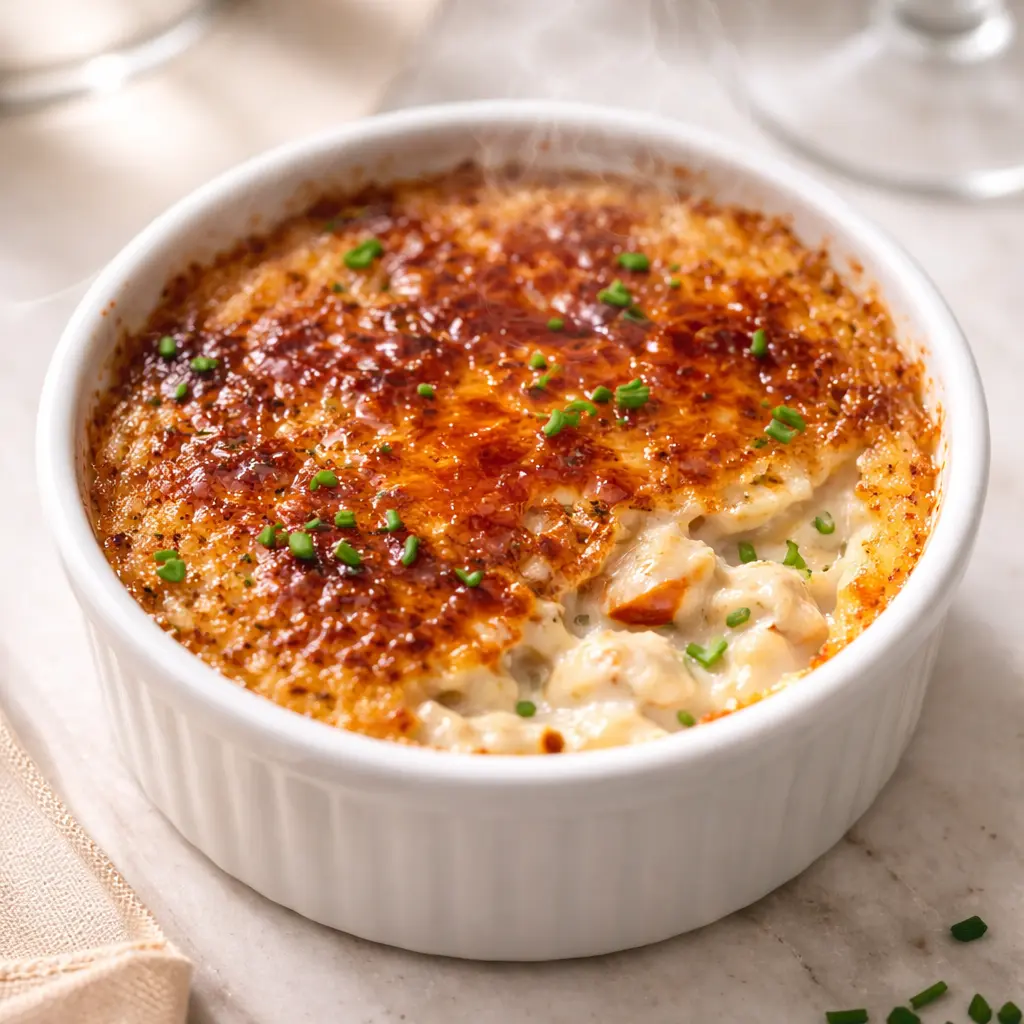
At its core, a crab brûlée recipe combines a savory custard base infused with fresh crab meat, topped with a caramelized sugar crust. The dish sits at the intersection of French culinary technique and contemporary seafood innovation.
The beauty of this recipe lies in its deceptive simplicity. While it appears sophisticated enough to challenge even experienced cooks, the process is remarkably straightforward. The custard base—traditionally made from cream, eggs, and seasonings—creates a canvas for the sweet, tender crab meat to shine. The caramelized sugar top adds textural contrast and visual drama.
What sets a crab brûlée recipe apart from other seafood appetizers is the interplay of temperatures and textures. The warm, delicate custard plays against the cool, crispy caramel shell. The briny sweetness of crab complements the subtle richness of cream and eggs. Each element serves a purpose in creating a harmonious, memorable bite.
Classic Crab Brûlée Recipe: The Foundation for Elegance
Ingredients (Serves 4)
For the Custard:
- 1 cup heavy cream, divided
- ½ cup whole milk
- 4 ounces fresh lump crab meat, carefully picked through for shells
- 3 large egg yolks
- ¼ teaspoon white pepper
- ¼ teaspoon kosher salt
- ⅛ teaspoon cayenne pepper
- ¼ teaspoon Old Bay seasoning (optional but traditional)
- 1 tablespoon fresh chives, finely minced
- ½ teaspoon fresh lemon zest
- 2 tablespoons freshly grated Gruyère cheese
For the Caramelized Top:
- 2 tablespoons granulated sugar per ramekin (approximately 8 tablespoons total for four servings)
- Additional pinch of sea salt (optional, for salted caramel variation)
Equipment You’ll Need
- Four 4-ounce ramekins or ceramic brûlée dishes
- Kitchen torch (or broiler as alternative)
- Bain-marie (water bath)—a larger roasting pan filled with hot water
- Whisk
- Fine-mesh strainer
- Instant-read thermometer
- Spoon for caramelizing sugar
Step-by-Step Instructions
Step 1: Prepare Your Mise en Place
Begin by gathering all ingredients and equipment. This is essential for savory brûlée work. Pour ¾ cup of heavy cream into a small saucepan and warm it gently over medium heat until small steam wisps appear—approximately 160°F. Do not allow it to boil. Remove from heat.
While the cream warms, gently pick through your crab meat, removing any shell fragments. Fresh lump crab meat is superior to canned for this recipe, but quality canned crab works if fresh isn’t available. Place the picked crab in a fine-mesh strainer and gently press to remove excess moisture. This step is crucial—excess liquid dilutes the custard.
Step 2: Create the Custard Base
In a medium bowl, whisk together egg yolks, white pepper, kosher salt, cayenne pepper, and Old Bay seasoning until fully combined. The yolks should lighten slightly from the whisking action. This takes approximately 1-2 minutes.
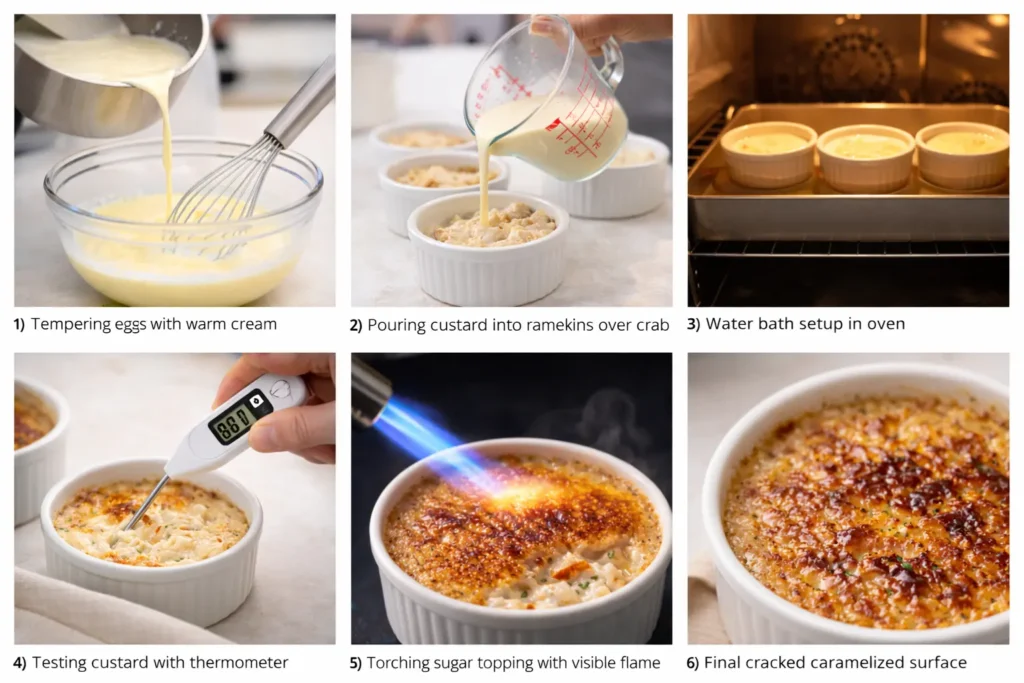
Slowly pour the warm cream into the egg yolk mixture while continuously whisking. This tempering process prevents the eggs from scrambling. Pour slowly—this shouldn’t be rushed. Once fully combined, strain the mixture through a fine-mesh strainer into a clean bowl. This removes any cooked egg bits and creates a silky texture.
Stir in the remaining ¼ cup of cold heavy cream, fresh chives, and lemon zest. Taste and adjust seasoning as needed. Remember that the cheese and salt from the crab will add flavor, so season conservatively.
Step 3: Distribute Crab and Custard
Divide the picked crab meat evenly among four ramekins, placing approximately 1 ounce in each. Distribute the crab so it spreads across the bottom rather than clumping in the center. This ensures every spoonful contains crab.
Pour the custard mixture over the crab, filling each ramekin until approximately ½ inch from the rim. Top each with a small amount of grated Gruyère cheese—roughly ½ tablespoon per ramekin. The cheese melts slightly during cooking and adds savory depth.
Step 4: Water Bath Setup
Preheat your oven to 325°F. Place the four filled ramekins into a larger roasting pan. Pour hot water into the roasting pan until it reaches approximately halfway up the sides of the ramekins. This gentle water bath ensures even, gentle cooking that produces a silky custard without cracks.
Step 5: Bake to Perfection
Bake for 12-15 minutes, until the custards are set but still slightly jiggly in the very center—approximately ½ inch of gentle jiggle. The internal temperature should reach 170°F at the edge, measured with an instant-read thermometer inserted halfway between center and edge.
Overbaking creates rubbery custards, so watch carefully after the 12-minute mark. The residual heat will continue cooking during cooling, and the sugar crust will provide additional heat when torched.
Step 6: Cool and Chill
Remove ramekins from the water bath and place on a cooling rack. Allow to cool to room temperature—approximately 20 minutes. Once cooled, refrigerate for at least 2 hours, though overnight is preferable. This chilling step is non-negotiable for the best texture and allows flavors to meld.
Step 7: Caramelize the Sugar
Remove ramekins from refrigeration approximately 15 minutes before serving. Sprinkle exactly 2 tablespoons of granulated sugar evenly across the top of each custard. You want a thin, even layer—not piled high.
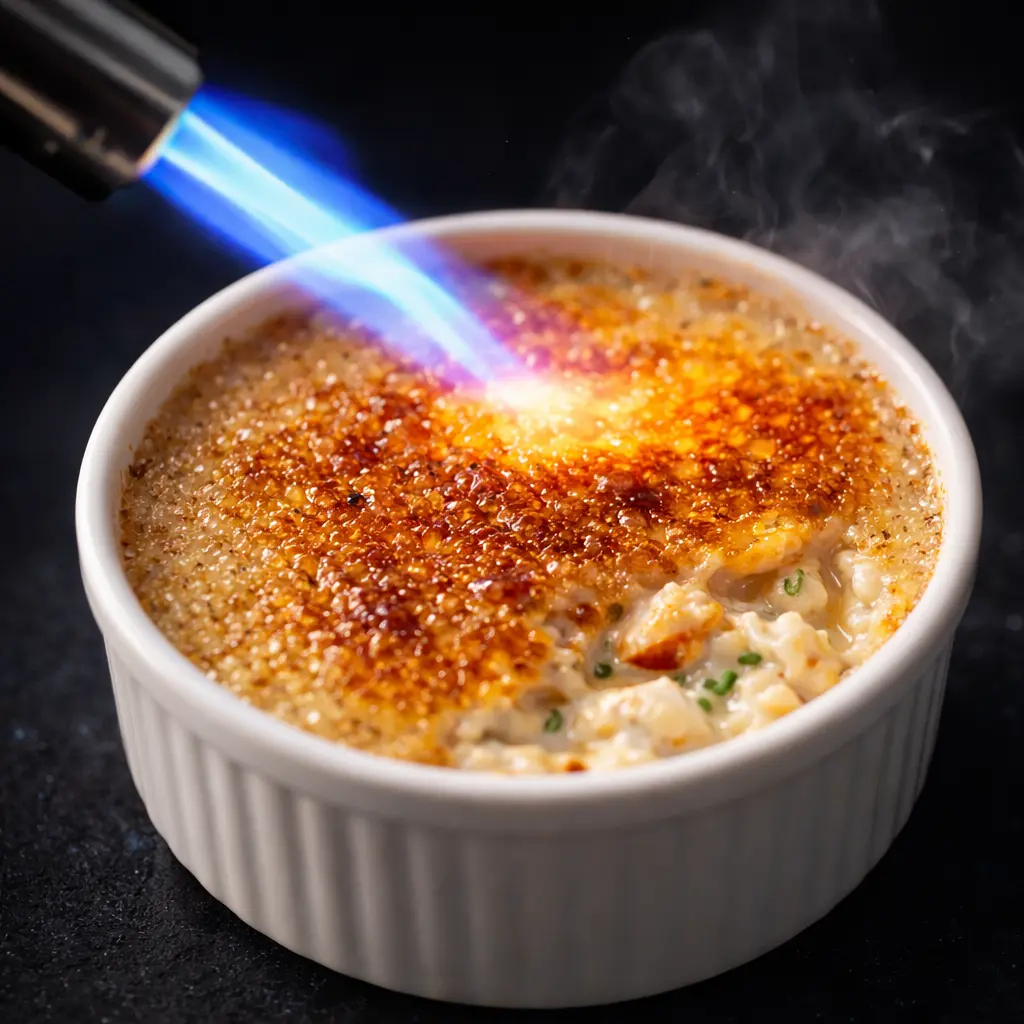
Using a kitchen torch, hold the flame approximately 2 inches from the sugar surface, moving it in small circles. The sugar will begin to liquefy and turn golden amber, approximately 30-45 seconds per ramekin. Watch carefully—the difference between perfect caramel and burnt is seconds. The color should resemble pale amber or honey.
Allow the caramelized sugar to cool for 1-2 minutes before serving. This hardens the crust slightly, creating that signature crackle when your spoon breaks through.
Easy Crab Brûlée Recipe: Simplified Technique for Home Cooks
Not every cook has access to a torch, and some prefer a streamlined approach. This simplified version maintains restaurant quality while reducing complexity.
Stovetop Torch-Free Method
Prepare the custard and ramekins exactly as detailed above. However, instead of torching individual servings, caramelize the sugar topping using your broiler.
After chilling, sprinkle sugar on each ramekin. Place them on a baking sheet and position under a preheated broiler (approximately 6 inches from heat) for 2-3 minutes. Watch constantly—broilers heat unevenly and can quickly burn sugar. The sugar should turn amber before the custard heats significantly.
Remove immediately when caramelized and allow to cool before serving. The broiler method produces excellent results, though the torch offers superior control and more dramatic presentation.
Make-Ahead Option
One of the best aspects of a crab brûlée recipe is that it’s designed for advance preparation. Prepare the custards through the chilling stage up to two days ahead. Caramelize the sugar tops only immediately before serving—this maintains the textural contrast that makes brûlée special.
This advance-preparation quality makes crab brûlée an ideal appetizer for entertaining. You eliminate last-minute stress while delivering elegant first courses.
Best Crab Brûlée Recipe Variations and Upgrades
Luxe Version with Champagne
Add ¼ cup of excellent Champagne to the warm cream before tempering eggs. The acidity and bubbles complement crab’s sweetness beautifully. Reduce other liquid proportionally to maintain custard consistency.
Mediterranean Twist with Saffron
Steep a pinch of saffron threads in the warm cream for 5 minutes before tempering eggs. This adds sophistication and beautiful pale yellow color. Pair with Pernod (1 teaspoon) for herbaceous notes that echo the sea.
Herb Garden Version
Replace chives with fresh tarragon, dill, or a combination. Tarragon particularly shines with crab—its subtle anise notes complement the briny sweetness. Use approximately ½ teaspoon of fresh minced herbs.
Smoked Paprika Variation
Add ⅛ teaspoon of quality smoked paprika to create a more complex flavor profile. This adds subtle smokiness without overwhelming delicate crab.
Truffle Elevation
For special occasions, add ½ teaspoon of truffle oil to the finished custard, or top with shaved fresh truffle before caramelizing sugar. This transforms an elegant dish into something truly extraordinary.
Roasted Garlic Depth
Roast 3-4 garlic cloves until golden and soft, then blend into the custard. This adds savory depth while maintaining refinement.
Crab Brûlée Recipe with Sophisticated Sauce Pairings
A simple crab brûlée can stand alone, but thoughtful sauce pairings elevate the experience.
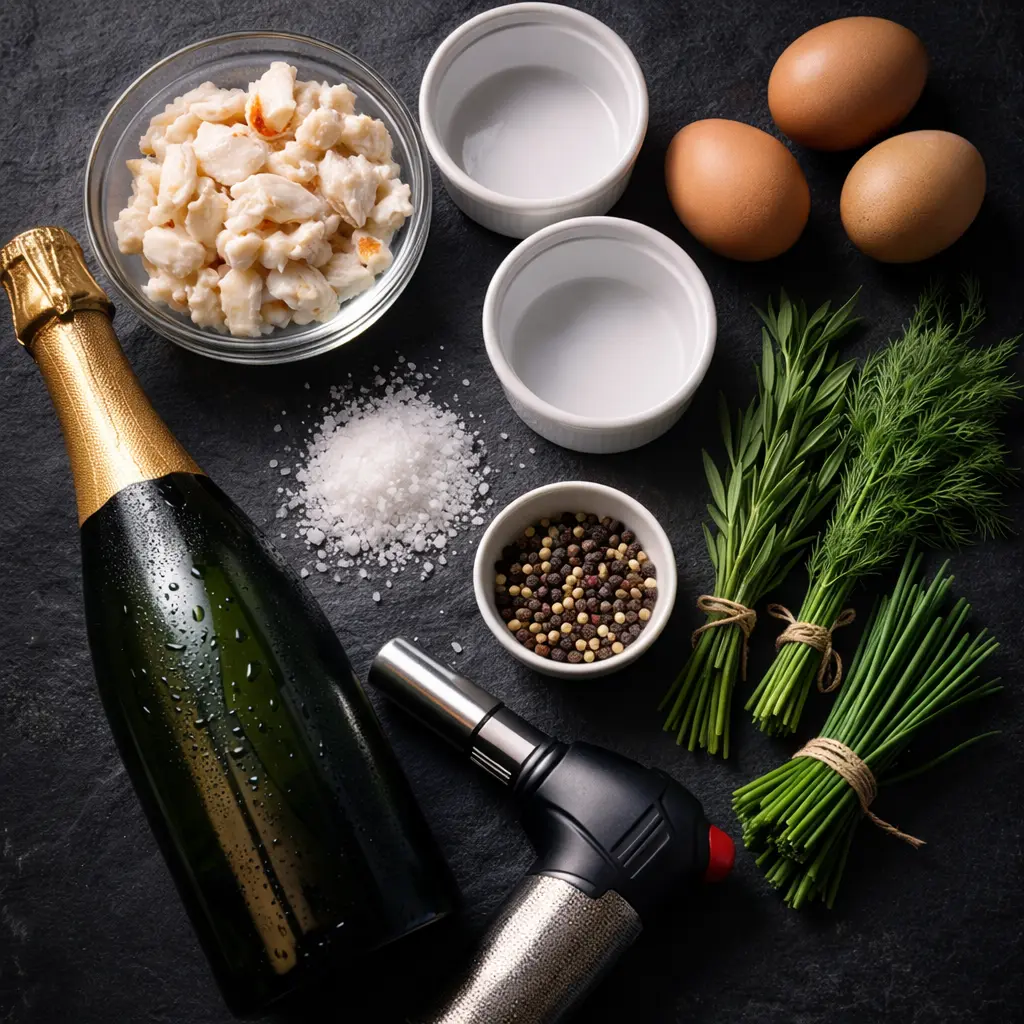
Classic Lemon Aioli
Whisk together 1 cup neutral oil, 3 egg yolks, 2 tablespoons fresh lemon juice, and 1 minced garlic clove. Alternatively, use a quality store-bought aioli and add fresh lemon zest and juice. A small dollop alongside provides brightness and richness.
Champagne Beurre Blanc
In a small saucepan, reduce ½ cup Champagne with 1 minced shallot until ¼ cup remains. Remove from heat and whisk in 4 tablespoons cold butter, one piece at a time. Season with salt and white pepper. Serve warm alongside—the acidity and richness complement both crab and brûlée.
Crispy Sage Brown Butter
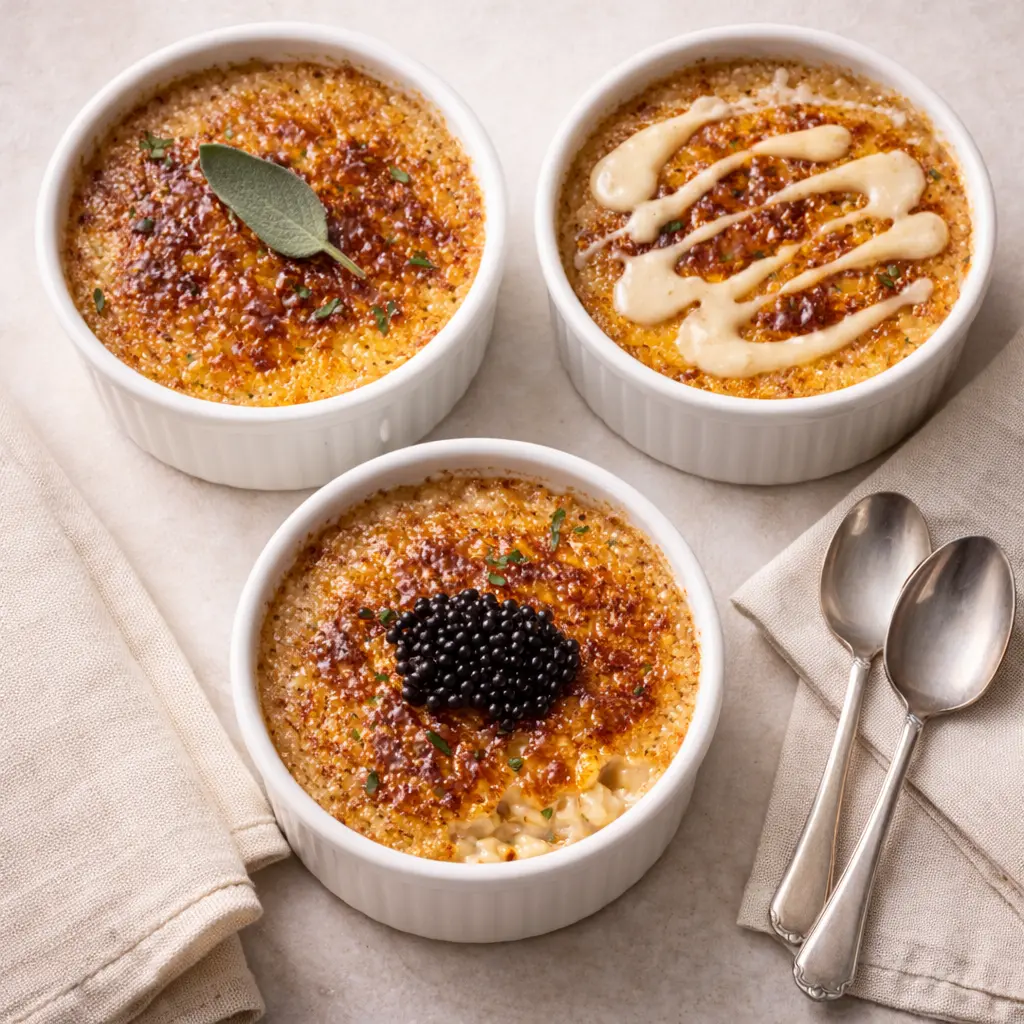
Heat 4 tablespoons butter until nutty brown (3-4 minutes), then add 8-10 fresh sage leaves. Allow to infuse off heat for 1 minute, then drizzle around the ramekin. This adds herbaceous warmth and textural crunch from crispy sage.
Caviar Garnish
For ultimate luxury, top each crab brûlée with ½ teaspoon of quality caviar just before serving. The salty, briny pop of caviar beads complements both components beautifully. This transforms the dish into something extraordinary.
Citrus Foam
Using an immersion blender, whip together ½ cup fresh citrus juice (lemon, Meyer lemon, or grapefruit) with ¼ cup heavy cream and a pinch of salt. Blend until light and airy. Top each brûlée with delicate foam just before serving.
Crab Brûlée Recipe with Premium Ingredients: Elevating the Experience
The quality of your ingredients directly impacts the final result. Here’s how to choose and source premium components.
Selecting the Perfect Crab
Fresh lump crab meat represents the gold standard. This consists of large pieces from the body of the crab, offering sweet flavor and delicate texture. Expect to pay premium prices, but the result justifies the cost.
Look for crab that’s been recently processed—ideally the same day or day prior. The color should be creamy white to golden (depending on species), with a sweet, briny aroma reminiscent of the ocean.
If fresh lump crab isn’t available, high-quality canned lump crab is acceptable. Drain thoroughly and gently pick through to remove any shell fragments. Avoid “crab meat” with added binders and fillers—these significantly diminish quality.
Some regions offer specialty crabs: Dungeness on the West Coast, Blue crabs from Maryland and the Chesapeake, Alaskan King crabs for dramatic presentations. Each brings unique characteristics—experiment with what’s available in your area.
Cream and Dairy Selection
Use heavy cream with at least 36% butterfat—this creates the richest custard. Whole milk adds body without excessive richness. Avoid ultra-pasteurized cream if possible, as the high-heat processing impacts flavor subtly.
The Gruyère cheese should be aged a minimum of 6 months. Its nutty, complex flavor complements crab without overpowering. Avoid pre-grated cheese—always grate from a block for superior melting and flavor.
Egg Quality Matters
Local, farm-fresh eggs from pasture-raised hens produce superior custards with richer yolk color and more complex flavor. The yolks are larger and more golden, creating superior color and creaminess in the finished brûlée.
Sugar for Caramelization
Use granulated white sugar—it caramelizes predictably and produces the most dramatic glass-like crust. Turbinado or demerara sugars work but are less refined. Brown sugar doesn’t work for brûlée—it burns rather than caramelizes.
Preparing Elegant Plating for Your Crab Brûlée Recipe
Restaurant-quality presentation elevates this dish from good to memorable.
The Ramekin Presentation
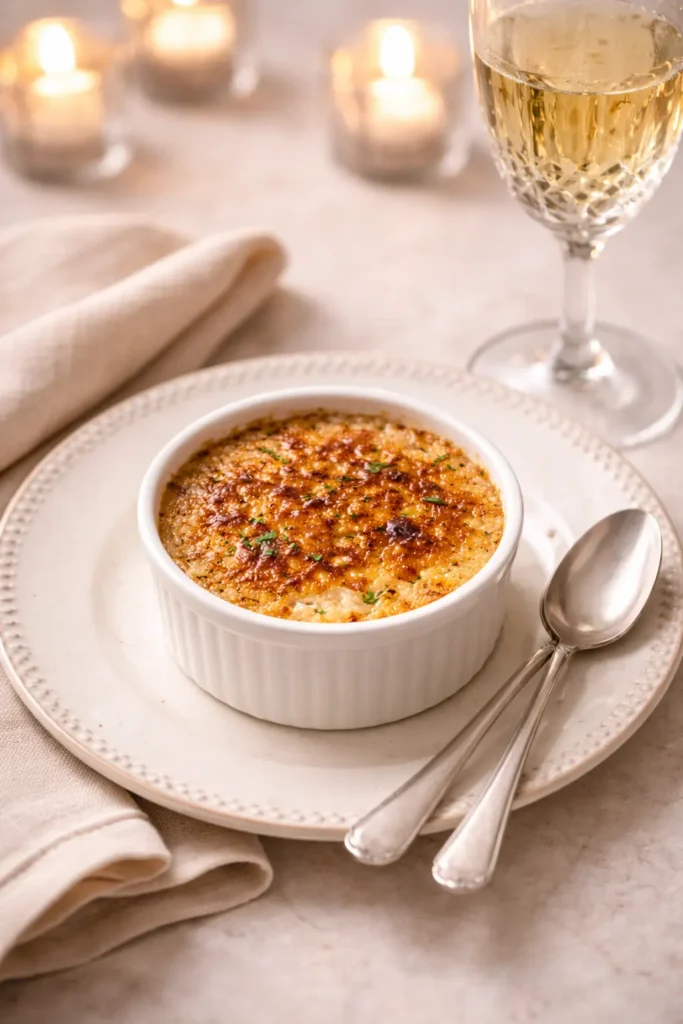
Serve crab brûlée in its cooking ramekin for both practicality and elegance. White ceramic ramekins provide the most sophisticated presentation, allowing the golden custard and caramelized sugar to star.
Place each ramekin on a charger plate or larger white plate. This creates visual proportion and allows room for sauce elements.
Garnish Strategy
Fresh herbs—particularly tarragon sprigs, dill fronds, or microgreens—add color and freshness against the golden brûlée. Place garnishes just before serving to prevent wilting.
A few flakes of fleur de sel (flower salt) placed delicately on the caramelized top add final sophistication and subtle salinity.
Sauce Placement
If serving sauce, place it in small pools around the ramekin or drizzle artistically. Never mask the brûlée top—this is the focal point. A small spoonful on the side allows diners to control their sauce experience.
Negative Space
Professional plates employ significant negative space. Don’t crowd the plate. This approach signals sophistication and allows each element to shine.
Tablescaping
Serve with quality white plates, cloth napkins, and proper glassware. Crab brûlée deserves an elegant setting. Consider pairing with an excellent Sauvignon Blanc, Albariño, or dry Riesling—white wines with acidity and minerality complement the dish beautifully.
Common Issues and Solutions: Troubleshooting Your Crab Brûlée Recipe
Cracked or Weeping Custards
Problem: Visible cracks or liquid pooling atop the custard. Solution: This indicates overcooking. Reduce baking time by 1-2 minutes. The custard should jiggle gently when the ramekin is moved, not be solid. Ensure water bath temperature remains gentle—boiling water creates temperature fluctuations.
Rubbery Texture
Problem: The custard feels dense and firm rather than silky. Solution: You’ve overbaked. Custards continue cooking after removal from heat due to residual warmth. Reduce oven temperature by 10°F and shorten cooking time. Pull ramekins when slightly less cooked than you think necessary.
Sugar Won’t Caramelize
Problem: Sugar melts but remains clear or only slightly amber. Solution: Ensure torch is functioning properly and held at correct distance (2 inches). Keep moving the torch in circles—concentrated heat in one spot burns rather than caramelizes. Sugar should progress from white to pale amber to deeper amber. Practice on a test plate to develop feel.
Caramel Tastes Bitter
Problem: Sugar burned rather than caramelized. Solution: You’ve held the torch too long or kept it too close. Caramelization happens fast—30-45 seconds typically. The color should be pale amber, not dark brown or black. If this happens, the custard is fine—simply scrape off burnt sugar and reapply fresh sugar more carefully.
Crab Flavor Too Subtle
Problem: The dish tastes like cream custard with minimal crab character. Solution: Use significantly fresher, higher-quality crab. Increase crab slightly to 5 ounces. Consider the Mediterranean variation with saffron or smoked paprika to complement rather than overpower crab flavor.
Custard Separates or Breaks
Problem: Visible liquid separation or grainy texture. Solution: Ensure proper tempering by adding warm cream slowly to eggs while whisking constantly. Never pour all warm cream into eggs at once. Also verify eggs aren’t scrambled from too-hot cream—temperature should be 160°F, not boiling.
Serving Your Crab Brûlée Recipe: Creating Memorable Moments
Timing Considerations
Crab brûlée is an appetizer, typically served as the first course before soup or salad. The richness demands this positioning—it shouldn’t follow another heavy course.
Allow approximately 8-10 minutes from kitchen to table for caramelization and cooling of the sugar crust. Time your torch work strategically so the crust is perfect when guests sit down.
Temperature Profile
The ideal serving experience involves contrast: a cool, creamy custard against warm caramelized sugar that’s still slightly soft. This happens in the 2-3 minute window after torching. Serve promptly after caramelizing.
Portion Size and Yield
This recipe yields 4 appetizer servings in 4-ounce ramekins. For smaller appetizers at a reception, use 2-ounce ramekins and reduce baking time by 2-3 minutes. For elegant plated entrée-sized portions, use 6-ounce ramekins and increase ingredients proportionally.
Scaling Up for Entertaining
This recipe scales beautifully. Double all ingredients for 8 servings. The preparation timeline doesn’t increase significantly since most work happens during advance preparation. Only the torching/finishing takes longer with more servings.
Serving for Special Occasions
Crab brûlée makes an unforgettable impression at dinner parties, anniversaries, and special celebrations. The theatrical torch moment creates memorable table-side drama.
For larger gatherings, prepare custards in advance and arrange on a rolling cart for dramatic table-side caramelization and service—this adds entertainment value to the dining experience.
Storage and Make-Ahead Guidance
Refrigerator Storage
Covered crab brûlée custards (before sugar topping) keep refrigerated for up to 2 days. Store in airtight containers away from strong-smelling foods—custards absorb odors easily.
Freezing Considerations
While custards can technically be frozen up to 1 month, texture sometimes suffers slightly upon thawing. If freezing, ensure airtight containers prevent freezer burn. Thaw overnight in refrigeration before serving. Reblend gently if any separation occurred during freezing.
Sugar Topping Timing
Always apply and caramelize the sugar topping immediately before serving. Sugar absorbs moisture from the custard and loses its crisp texture if applied more than 10 minutes before service.
Leftover Management
Leftover custard without sugar crust keeps refrigerated up to 3 days. These can be eaten as chilled custard with a spoon, though they lose the textural magic of the sugar crust. Alternatively, reheat gently in a warm water bath to approximately 140°F before serving—never microwave, which creates uneven heating and potential texture damage.
The Science Behind the Perfect Crab Brûlée Recipe
Understanding the culinary science helps you troubleshoot and innovate confidently.
Custard Chemistry
Custards are emulsions where egg yolks act as binders holding cream and milk together. The yolk contains lecithin, a natural emulsifier. Heat denatures the yolk proteins, causing them to set and trap liquid, creating the characteristic silky texture.
The exact baking temperature determines texture. Too low and the proteins don’t denature fully, creating a loose texture. Too high and the proteins over-contract, expelling moisture and creating a rubbery, separated result. The target internal temperature of 170°F at the edge represents the perfect balance.
Caramelization Process
Caramelization begins around 320°F, when sugar molecules break down and form new compounds creating brown color and complex flavors. The dramatic transformation from white sugar to amber liquid to glass-hard crust happens in seconds—this rapid change requires attention and practice.
Proper caramelization creates a compound called diacetyl, responsible for the pleasant caramel flavor. Over-caramelization creates bitter compounds from further decomposition. This is why timing is critical.
Crab Meat Considerations
Crab meat contains proteins that change slightly during custard cooking. Gentle, low-temperature baking prevents these proteins from toughening. This is why the water bath and careful temperature control are essential—they ensure the crab remains tender.
The briny flavor compounds in crab are fat-soluble, meaning they marry beautifully with the cream and egg yolks. This is why crab brûlée works so elegantly—the components share complementary flavor chemistry.
Pairing Crab Brûlée with Wine and Beverages
Champagne and Sparkling Wine
The acidity and bubbles of Champagne cleanse the palate between bites. Dry styles (Brut or Extra Brut) work beautifully. The minerality in Champagne echoes the ocean notes in crab.
Sauvignon Blanc
Crisp white wines with herbaceous notes and bright acidity complement both crab and rich custard. Loire Valley Sauvignon Blancs offer excellent value and superior quality.
Albariño
Spanish Albariño, with its citrus and salinity, creates an elegant pairing. This works particularly well with citrus sauce variations.
Dry Riesling
German dry Rieslings offer surprising sophistication with brûlée. The slight sweetness and floral notes complement the caramelized sugar while the acidity balances richness.
Dry White Burgundy
For special occasions, quality white Burgundy (Chablis, Meursault) provides ultimate elegance. The complexity mirrors the sophistication of the dish.
Aperitif Option
Serve crab brûlée as part of an aperitif course with Champagne or Prosecco. The richness and elegance suit pre-dinner entertaining beautifully.
Entertaining with Crab Brûlée: Menu Planning and Pacing
As Part of a Sophisticated Three-Course Meal
First Course: Crab brûlée with Champagne Second Course: Light soup or salad Third Course: Fish or light protein entrée with vegetable accompaniments Dessert: Elegant dessert brûlée (the traditional crème brûlée or chocolate variation)
This progression creates elegant pacing—from rich and luxurious, to light and refreshing, to satisfying protein, ending with sweetness.
Menu Pairing Considerations
After crab brûlée, avoid heavy cream sauces in following courses. The richness of the custard demands lighter subsequent courses. Fish or shellfish entrées work beautifully, as do lighter poultry preparations.
Consider what flavors preceded the brûlée. If you served oysters or ceviche as an amuse-bouche, the progression feels natural. If starting the meal with brûlée, keep it the first substantial course to avoid flavor fatigue.
Timing and Logistics
Crab brûlée requires minimal last-minute work—only sugar torching happens during service. Prepare custards 1-2 days ahead, allowing you to focus on final courses during cooking.
The torching takes approximately 1 minute for four servings, plus 2-3 minutes cooling before serving. This fits naturally into dining pacing between courses.
Conclusion: Mastering the Art of Crab Brûlée
A perfect crab brûlée recipe represents the intersection of classical French technique and contemporary seafood sophistication. The dish appears intimidating but rewards careful attention with restaurant-quality results achievable in any home kitchen.
The beauty of this recipe lies in its versatility. Start with the classic version to master technique, then explore variations and sauce pairings as you gain confidence. Whether you’re preparing an intimate dinner for two or entertaining a gathering of friends, crab brûlée delivers elegance, drama, and unforgettable flavor.
The key to success isn’t complicated equipment or exotic ingredients—it’s understanding the fundamentals. Proper tempering of eggs, careful water bath temperature control, precise baking time, and confident sugar caramelization. Master these elements, and you’ll produce magnificent crab brûlée consistently.
Your guests will remember not just the remarkable flavors, but the theatrical moment of the torch and the shared anticipation as everyone breaks through that glittering caramelized crust simultaneously. This is dining theater at its finest—and now it’s within your reach.
