
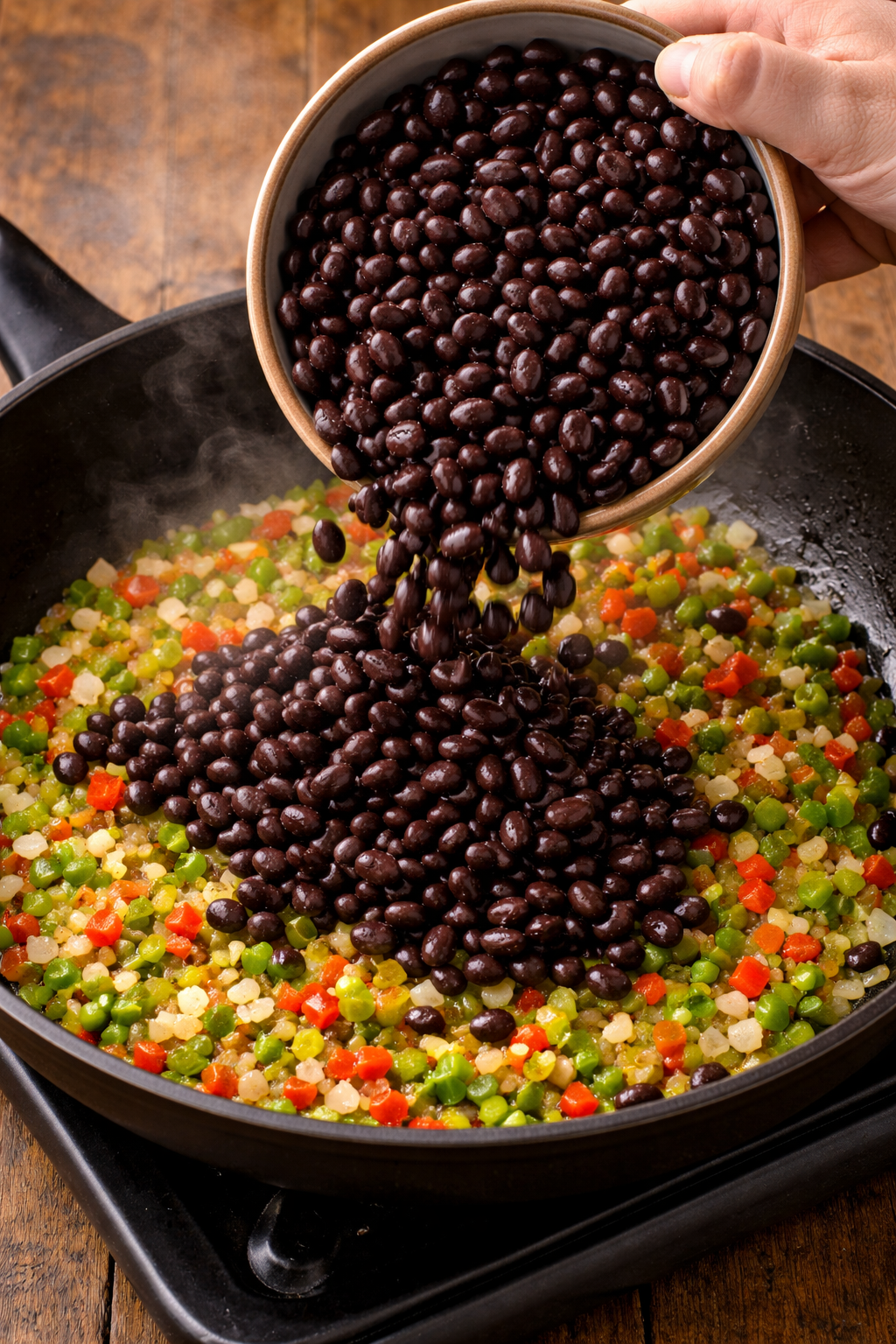
The Ultimate Gallo Pinto Recipe: Costa Rica & Nicaragua’s Beloved Rice and Beans
There’s something magical about waking up to the aroma of sautéed onions, peppers, and perfectly seasoned rice and beans. That’s exactly what gallo pinto brings to breakfast tables across Central America every single morning.
I’ve spent years perfecting this recipe, traveling between Costa Rica and Nicaragua, learning from home cooks who’ve been making this dish for generations. What I discovered is that gallo pinto isn’t just food—it’s a cultural touchstone that brings families together.
What Is Gallo Pinto?
Gallo pinto translates to “spotted rooster” in Spanish, named for the speckled appearance created when black or red beans mix with white rice. This traditional Central American dish serves as the cornerstone of breakfast throughout Costa Rica and Nicaragua, though you’ll find passionate debates about which country does it better.
The dish combines cooked rice with beans, sautéed with onions, bell peppers, and cilantro. The Costa Rican version typically uses Salsa Lizano (a unique tangy-sweet sauce), while the Nicaraguan approach often incorporates more onion and sometimes a touch of cumin.
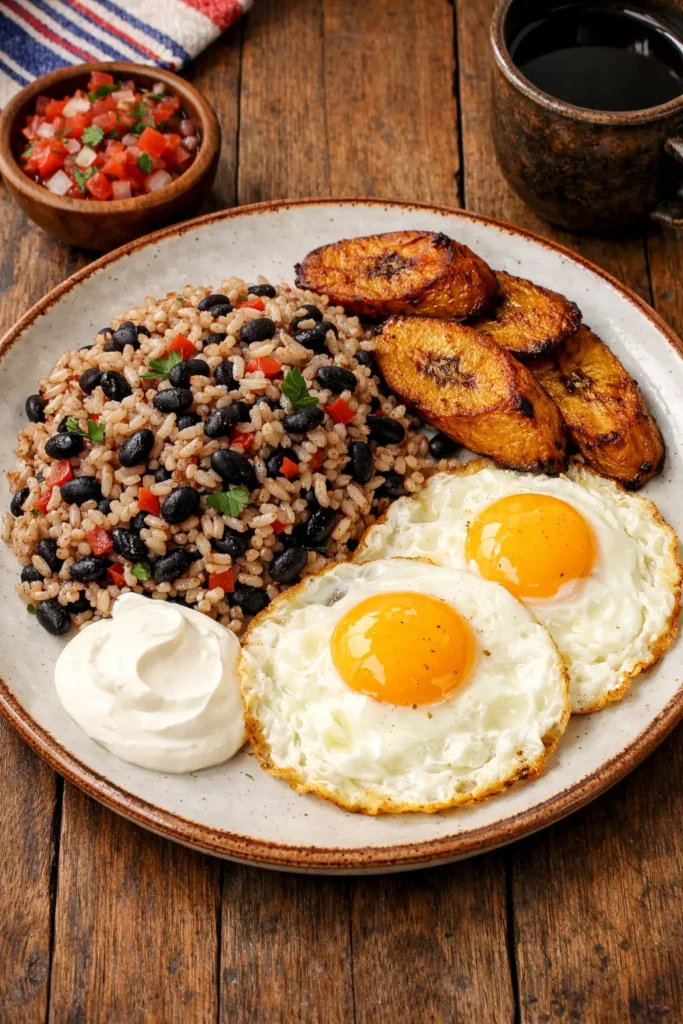
The Secret to Authentic Gallo Pinto
After making this recipe hundreds of times, I’ve learned the most crucial element: day-old rice and beans. Fresh rice turns mushy when fried, but refrigerated rice has dried out just enough to achieve that perfect texture—slightly crispy edges with a tender center.
The second secret? Don’t rush the cooking process. Those caramelized bits at the bottom of the pan (what Latin American cooks call “concón”) add incredible depth of flavor.
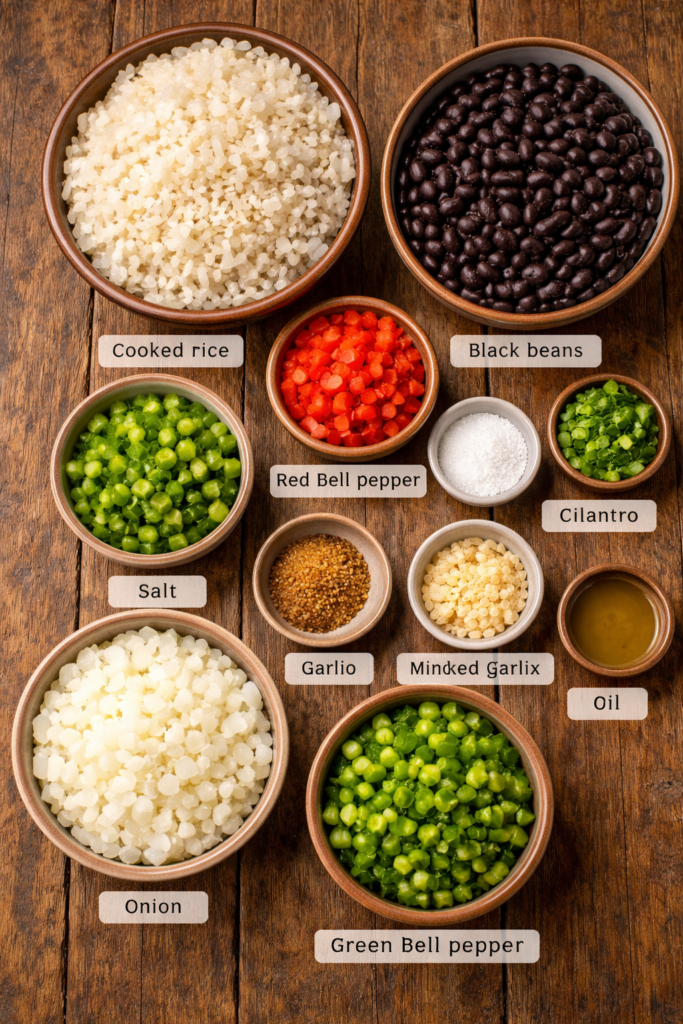
Ingredients for the Perfect Gallo Pinto Recipe
Main Ingredients:
- 3 cups cooked white rice (preferably day-old, refrigerated)
- 2 cups cooked black beans (or red beans for Nicaraguan style)
- 1 cup bean cooking liquid (reserved from cooking beans)
- 1 medium onion, finely diced
- 1 red bell pepper, finely diced
- 3 cloves garlic, minced
- 1/4 cup fresh cilantro, chopped
- 3 tablespoons vegetable oil or coconut oil
Costa Rican Style Additions:
- 3 tablespoons Salsa Lizano
- 1/2 teaspoon Worcestershire sauce
Nicaraguan Style Additions:
- 1 teaspoon ground cumin
- Extra onion (Nicaraguans love their onions!)
- Optional: 1/4 teaspoon achiote for color
Seasoning:
- Salt and black pepper to taste
- 1/2 teaspoon chicken bouillon (optional, but authentic)
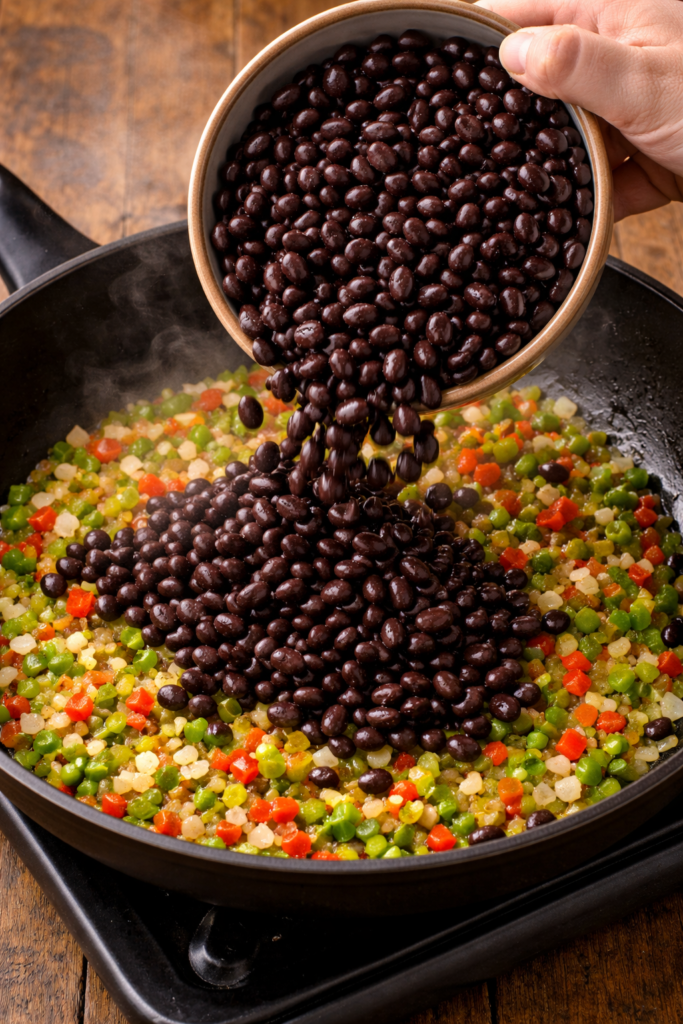
Step-by-Step Gallo Pinto Recipe Instructions
Step 1: Prepare Your Base Ingredients
The night before (or at least several hours ahead), cook your rice and beans separately. This isn’t optional—I tried making this with fresh rice once, and it turned into a mushy disaster.
For the beans, save at least one cup of the cooking liquid. This liquid contains starch and flavor that helps everything come together beautifully. If you’re using canned beans, drain them but reserve some liquid and add a splash of water.
Break up any clumps in your refrigerated rice with your hands before cooking. This ensures even distribution throughout the dish.
Step 2: Sauté the Vegetables
Heat your oil in a large skillet or wok over medium-high heat. I prefer a well-seasoned cast iron pan because it creates those delicious crispy bits.
Add the diced onion first, cooking for about 3-4 minutes until it becomes translucent and starts developing golden edges. The onion should smell sweet and aromatic.
Toss in the bell pepper and cook for another 2-3 minutes. Add the minced garlic and cook for just 30 seconds—any longer and it becomes bitter.
Pro tip from my Nicaraguan grandmother: Don’t stir constantly. Let the vegetables sit undisturbed for 30-second intervals to develop caramelization.
Step 3: Combine Beans and Liquid
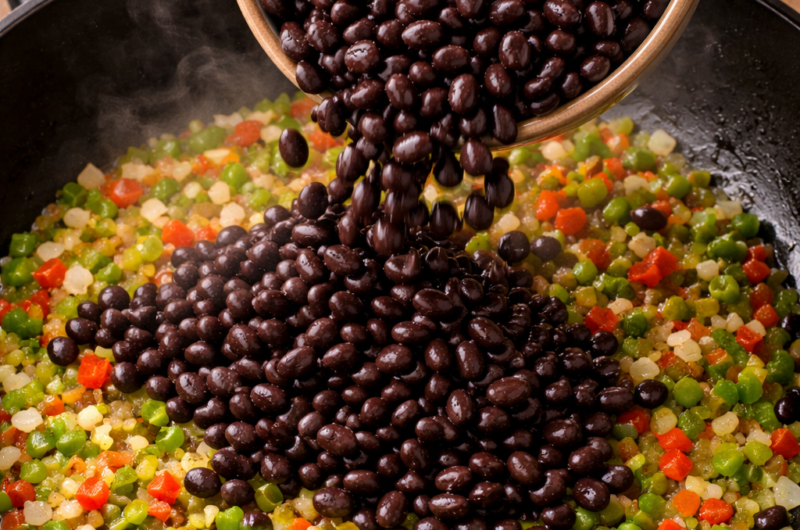
Add your cooked beans to the vegetable mixture along with half the reserved bean liquid. If you’re making the Costa Rican version, this is when you add the Salsa Lizano and Worcestershire sauce. For the Nicaraguan recipe, add your cumin now.
Let this mixture cook for 2-3 minutes, stirring occasionally, until the liquid reduces slightly and the beans are heated through.
Step 4: Add the Rice
Here’s where the magic happens. Add your day-old rice to the pan, breaking up any remaining clumps as you go.
Using a wooden spoon or spatula, gently fold the rice into the bean mixture. Don’t stir aggressively—you want to combine everything without mashing the beans.
Add the remaining bean liquid gradually as needed. The mixture should be moist but not wet or soupy.
Step 5: Fry to Perfection
Increase the heat to medium-high and let the gallo pinto cook without stirring for 2-3 minutes. You’re aiming for a slightly crispy bottom layer.
Flip sections of the rice mixture (like you would a pancake) to get crispy bits throughout. This technique creates amazing texture contrast.
Continue cooking for another 5-7 minutes, flipping occasionally, until you achieve your desired level of crispiness.
Step 6: Final Touches
Remove from heat and fold in the fresh cilantro. Taste and adjust seasoning with salt and pepper.
The gallo pinto should be flavorful, slightly moist (but not wet), with some crispy edges throughout.
Costa Rican vs Nicaraguan Gallo Pinto: What’s the Difference?
Both countries claim gallo pinto as their national dish, and honestly, both versions are absolutely delicious. Here’s what sets them apart:
Costa Rican Gallo Pinto:
- Uses black beans exclusively
- Features Salsa Lizano (a must-have ingredient)
- Slightly sweeter flavor profile
- Often includes a touch of Worcestershire sauce
- Typically served with natilla (sour cream)
Nicaraguan Gallo Pinto:
- Can use either black or red beans
- Relies on cumin for distinctive flavor
- More onion-forward
- Sometimes includes achiote for reddish color
- Often served with fried cheese (queso frito)
I’ve made both versions countless times, and my honest opinion? They’re different expressions of the same beautiful idea. My recommendation is to try both and decide which style speaks to your taste buds.
Serving Suggestions: The Traditional Way
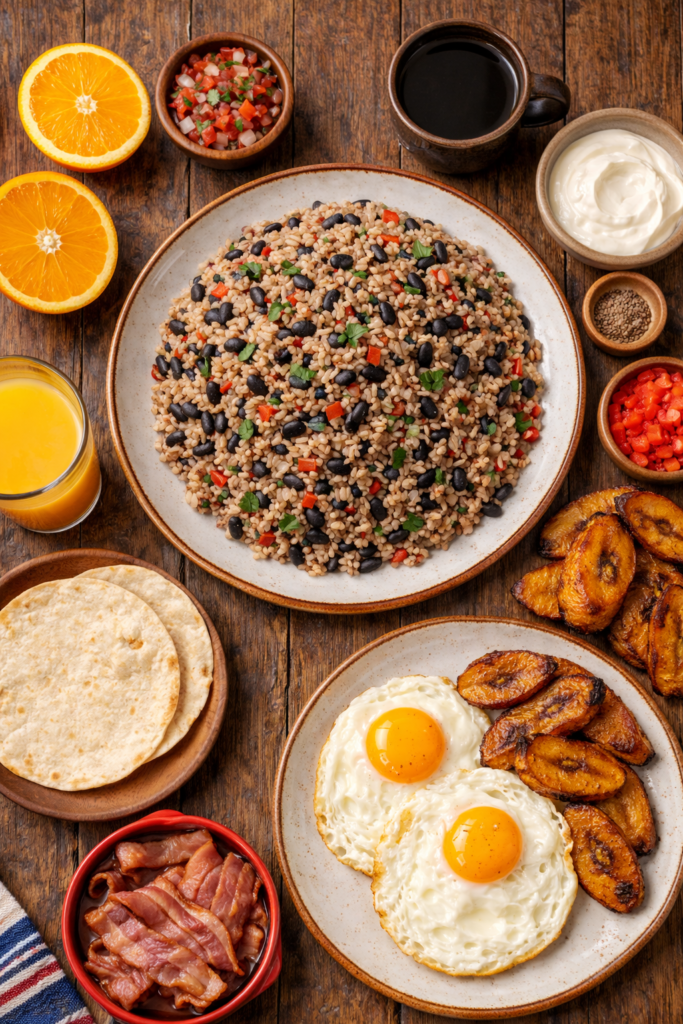
In Costa Rica and Nicaragua, gallo pinto isn’t just a side dish—it’s the star of breakfast. Here’s how locals serve it:
Classic Breakfast Plate:
- Generous scoop of gallo pinto
- 2 fried eggs (sunny side up or over easy)
- Sliced avocado
- Fried sweet plantains (plátanos maduros)
- Natilla or sour cream
- Fresh corn tortillas
- A slice of fresh white cheese
Optional Additions:
- Fried pork chops (chuletas)
- Grilled steak (bistec)
- Fresh pico de gallo
- Refried beans on the side
- Hot sauce (salsa picante)
Make-Ahead Tips and Storage
One of the best things about this gallo pinto recipe is how well it keeps and reheats. In fact, many people say it tastes even better the next day.
Storage Instructions:
- Refrigerator: Store in an airtight container for up to 5 days
- Freezer: Freeze in portion-sized containers for up to 3 months
- Reheating: Add a tablespoon of water and reheat in a skillet over medium heat for best results
Meal Prep Strategy:
I cook a big batch every Sunday and portion it out for easy weekday breakfasts. Simply reheat, fry an egg, and breakfast is ready in 5 minutes.
Pro meal prep tip: Cook your rice and beans on the weekend, then make fresh gallo pinto throughout the week. This way, you get that just-cooked taste every time.
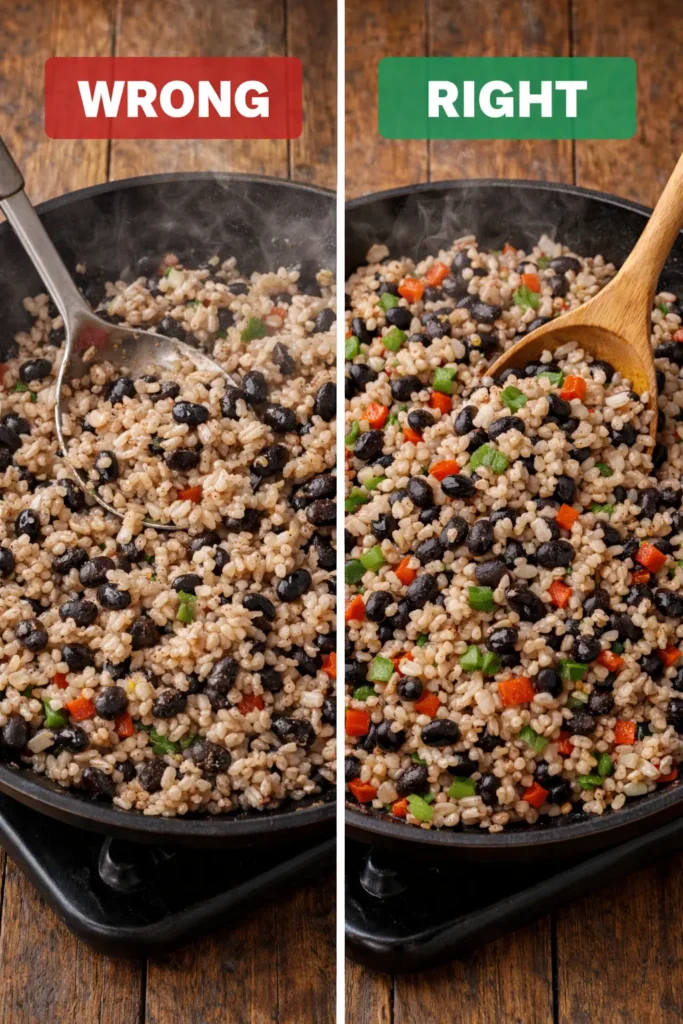
Common Mistakes and How to Avoid Them
After teaching this recipe to dozens of friends and readers, I’ve noticed the same mistakes keep popping up:
Using Fresh Rice
The Problem: Fresh rice is too moist and becomes mushy when fried. The Solution: Always use day-old refrigerated rice. If you’re in a pinch, spread fresh rice on a baking sheet and refrigerate for 1-2 hours.
Overcrowding the Pan
The Problem: Too much gallo pinto in one pan prevents proper browning. The Solution: Cook in batches or use a larger skillet. You need space for that crispy texture to develop.
Not Seasoning Properly
The Problem: Bland gallo pinto is a sad thing. The Solution: Taste as you go. The bean liquid, Salsa Lizano, and bouillon all add salt, so add carefully. Remember, you can always add more, but you can’t take it away.
Stirring Too Much
The Problem: Constant stirring creates mush instead of that perfect texture. The Solution: Let it sit and develop those crispy bits. Stir only when necessary.
Variations and Adaptations
While purists might argue against changing the traditional recipe, I’ve experimented with several variations that work beautifully:
Vegan Gallo Pinto
Replace chicken bouillon with vegetable bouillon or a dash of soy sauce. Skip the Worcestershire sauce or use a vegan version. Everything else stays the same—this dish is naturally plant-based friendly.
Brown Rice Gallo Pinto
Use brown rice instead of white for added fiber and nutrients. The texture will be slightly chewier, but the flavor remains fantastic. You might need a bit more bean liquid since brown rice absorbs more moisture.
Instant Pot Gallo Pinto
Cook your beans and rice together in the Instant Pot, then follow the sautéing steps. This works well for the initial cooking but remember—you still need day-old rice for the final preparation.
Coconut Milk Version
Some Caribbean-influenced recipes add coconut milk to the bean liquid for extra richness. Use half bean liquid and half coconut milk for a creamy, tropical twist.
The Cultural Significance of Gallo Pinto
Beyond being delicious, gallo pinto represents something deeper in Central American culture. It’s the great equalizer—served in street-side sodas (casual eateries) and upscale restaurants alike.
In Costa Rica, they celebrate National Gallo Pinto Day every April. Families gather to cook massive batches, and competitions determine who makes the best version.
The dish also reflects resourcefulness and sustainability. It transforms humble ingredients—rice, beans, day-old leftovers—into something everyone craves. Nothing goes to waste, and every grain of rice finds purpose.
When I eat gallo pinto, I’m reminded that the best food doesn’t need fancy ingredients or complicated techniques. It needs care, proper technique, and respect for tradition.
Frequently Asked Questions
Can I use canned beans for this gallo pinto recipe?
Absolutely! Canned black beans work perfectly well. Drain them but save some liquid, then add a few tablespoons of water to thin it out. The result won’t differ much from using home-cooked beans.
What if I can’t find Salsa Lizano?
Mix 2 tablespoons Worcestershire sauce with 1 tablespoon of ketchup and a splash of cumin. It’s not identical, but it creates a similar sweet-tangy flavor profile. You can also order Salsa Lizano online from Latin American grocery store
Can I make gallo pinto with fresh rice?
I strongly advise against it. If absolutely necessary, spread cooked rice on a baking sheet and refrigerate for at least 2 hours to remove excess moisture. Fresh rice will almost always turn mushy.
How do I prevent my gallo pinto from becoming too dry?
Keep that bean cooking liquid handy! Add it gradually as you cook. The rice should look slightly moist and glossy, not dry or sticky.
Is gallo pinto gluten-free?
Worcestershire sauce and Salsa Lizano labels, as some brands contain gluten. Most Salsa Lizano is gluten-free.
Nutrition Information (Per Serving)
Based on 6 servings
- Calories: 285
- Protein: 9g
- Carbohydrates: 48g
- Fiber: 8g
- Fat: 7g
- Sodium: 420mg (varies based on salt added)
Note: Nutrition values are approximate and will vary based on specific ingredients used
Final Thoughts
This gallo pinto recipe has become one of my most-requested dishes. Friends who’ve tried it tell me they can’t go back to plain rice and beans—and I completely understand.
What makes this recipe special isn’t just the technique or the ingredients. It’s the connection to a culture that values simplicity, flavor, and bringing people together around the table.
Whether you’re making the Costa Rican version with Salsa Lizano or the Nicaraguan style with extra cumin, you’re creating something that’s been perfected over generations. You’re participating in a tradition that crosses borders and brings joy to millions of breakfast tables.
Start with day-old rice, take your time with the sautéing, and don’t be afraid of those crispy bits. Your first attempt might not be perfect, but by the third or fourth time, you’ll have developed your own rhythm and preferences.
Now it’s your turn. Get that rice in the fridge tonight, and tomorrow morning, discover why Central Americans consider this their most important meal of the day.
Have you made this gallo pinto recipe? I’d love to hear about your experience! Did you try the Costa Rican or Nicaraguan version? Share your results in the comments below.
Gallo Pinto Recipe
Course: Breakfast, Side DishCuisine: Costa Rican, Nicaraguan6
servings10
minutes20
minutes300
kcal30
minutesIngredients
3 cups day-old cooked white rice
2 cups cooked black beans
1 cup bean liquid
1 onion, diced
1 red bell pepper, diced
3 cloves garlic, minced
3 tablespoons Salsa Lizano
3 tablespoons oil
1/4 cup cilantro
Salt and pepper to taste
Instructions
- Heat oil and sauté onion until translucent
- Add bell pepper and garlic, cook 2 minutes
- Add beans, bean liquid, and Salsa Lizano
- Fold in day-old rice gently
- Cook over medium-high heat, letting bottom crisp
- Flip sections to create crispy bits throughout
- Fold in cilantro and adjust seasoning
This authentic gallo pinto recipe brings Costa Rican and Nicaraguan breakfast traditions to your kitchen with simple ingredients and traditional techniques perfected over generations.“
